
Upper School is Standing Up for Learning
To kick off the 2025-26 school year, the upper school math department engaged in a book study. A key takeaway from Peter Lijedahl's Building Thinking Classrooms in Mathematics, is that sometimes students are operating with compliance instead of through their own curiosity. The Upper School Math Department set a shared goal of increasing the amount of original student thinking that takes place on a daily basis. We didn’t want to spoon feed our students information. We wanted them to have the opportunity to think critically and creatively; a skill they will need for the rest of their lives. We committed to creating environments where students are leading their learning organically.
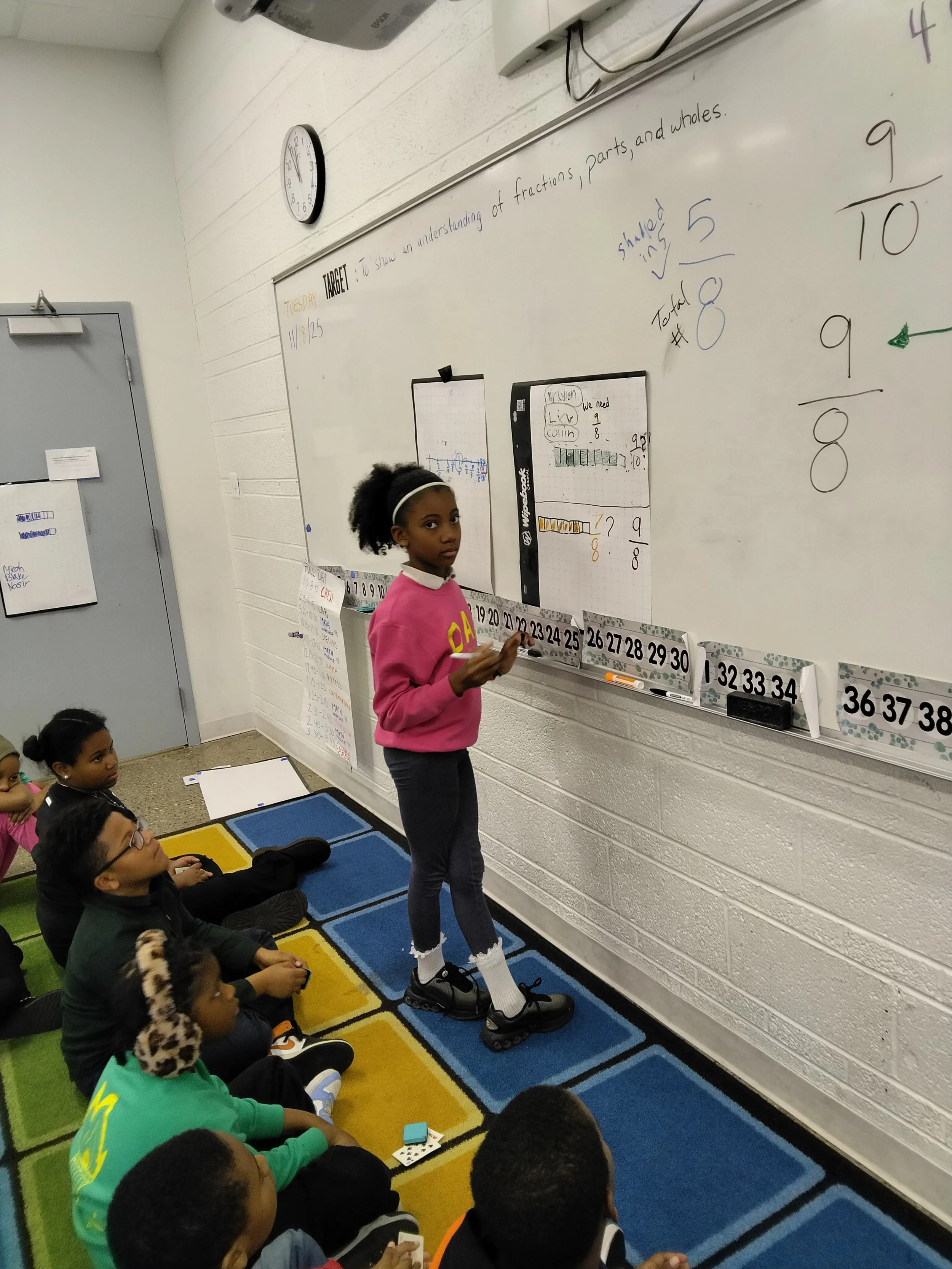
A student solves and shares her thinking!
We began by de-centering our classrooms. No longer are teachers positioned at the front of a classroom space reciting content. Teachers are traveling between desks while students excitedly share their expertise. They challenge one another and build onto each other's ideas. The decentered classroom also includes walls covered with resources such as anchor charts, math definitions, and procedural flow charts. Everything our students need for success is within reach. The learning occurs at the nucleus of the room with opportunities for students to orbit around the perimeter for reference material.
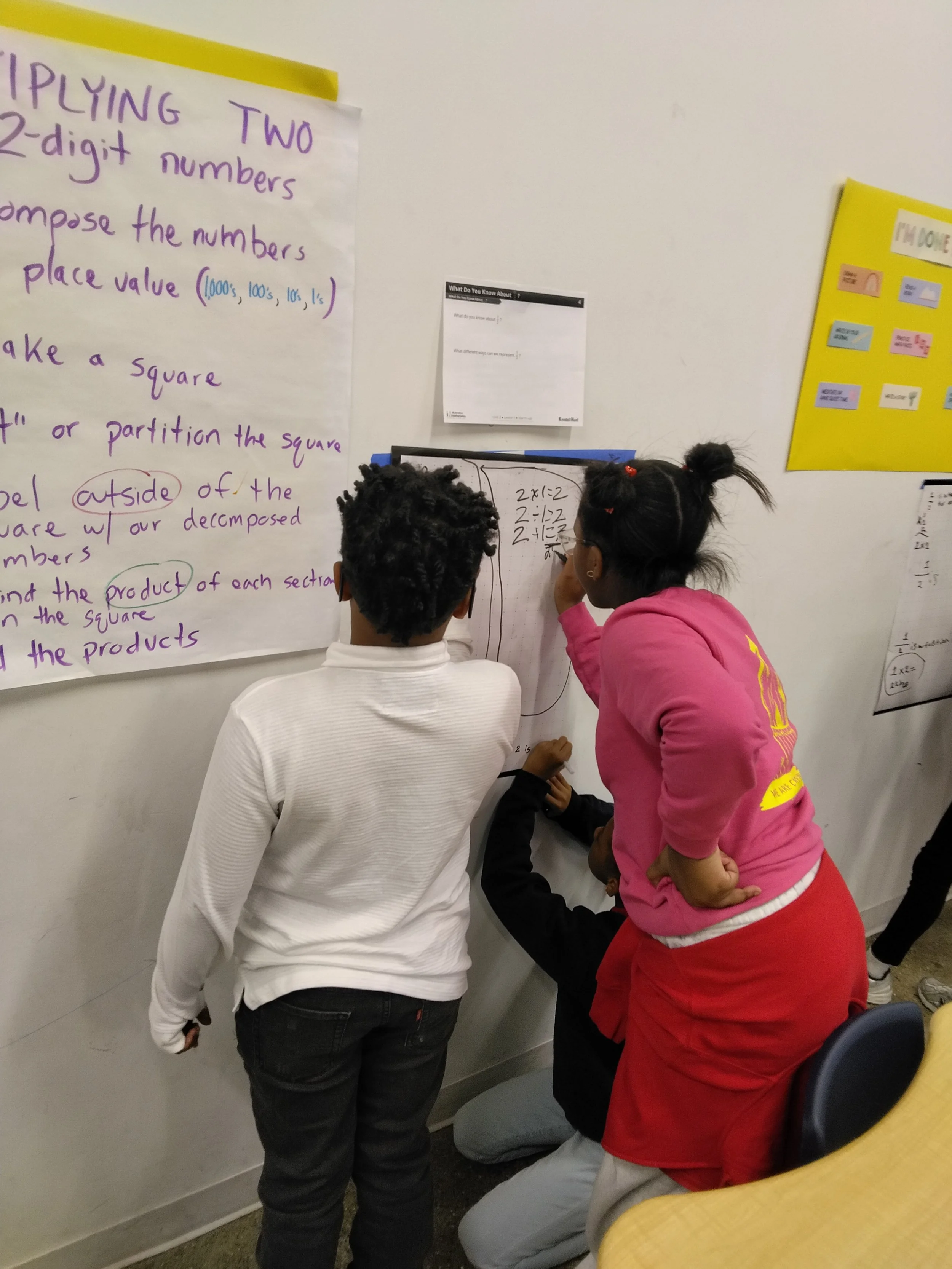
Students use resources in the room and solve together!
Our favorite and most beneficial implementation has been the use of vertical non-permanent surfaces. It's no secret that students at this age are packed full of what seems to be never depleting energy. Allowing them to stand is one small shift that leads to more engagement. Students are randomly assigned to vertical stations where they tackle new math problems collaboratively then learn concepts. The strategy is called a flipped lesson. There is no pressure to be correct, but rather an expected commitment to participate in the learning process. This reduces the fear of failure. Students view each other's methods and make meaning of the various ways they sought to meet the task. In this way their confidence increases, and more perspective is given.
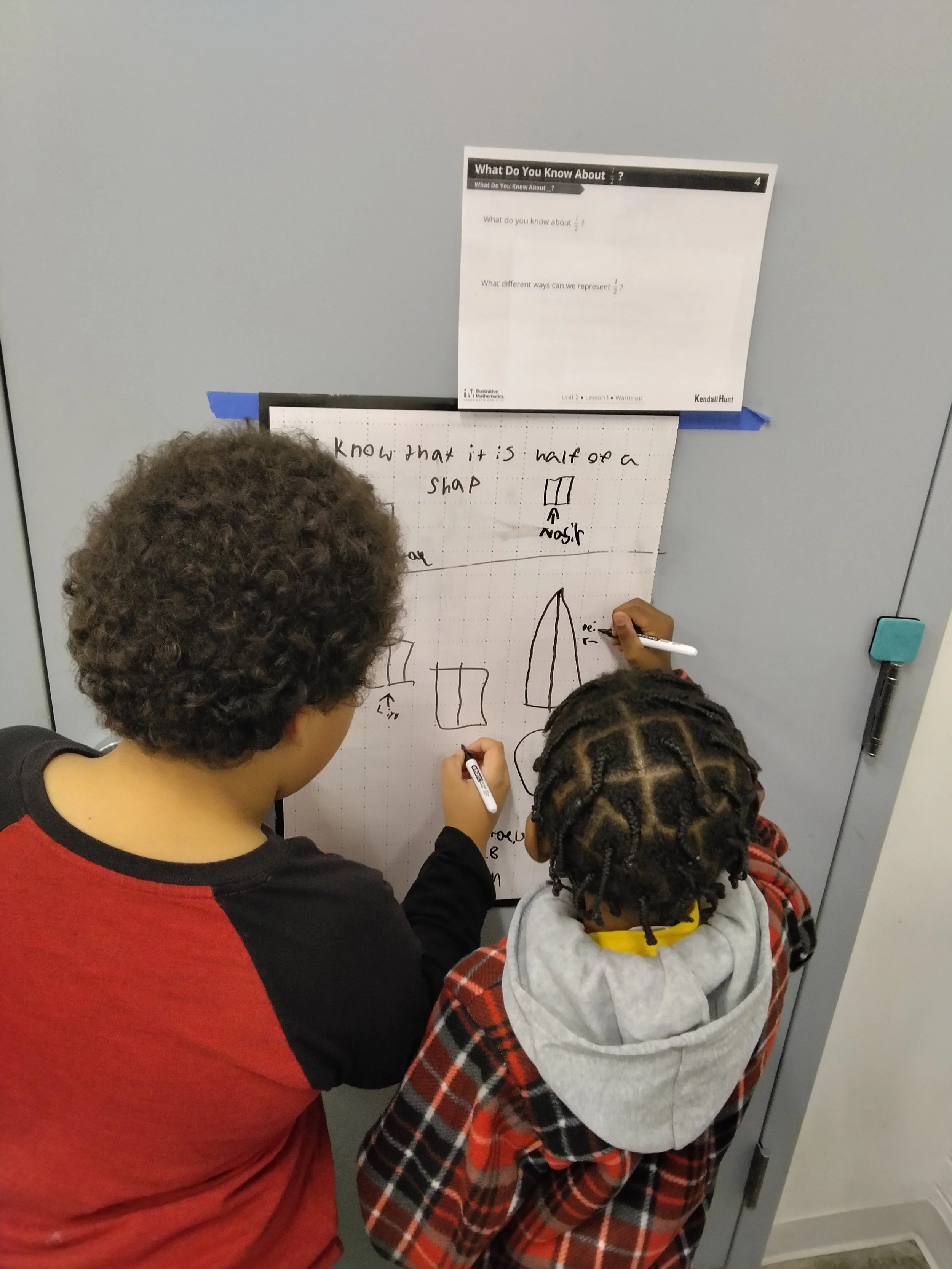
Students stand, at vertical work stations, and solve together!
It has been amazing to watch the students take leadership of their learning. Test scores have improved as well as everyday participation. We don’t have recitation in our classrooms. We are building thinkers and problem solvers by standing up for learning each day.
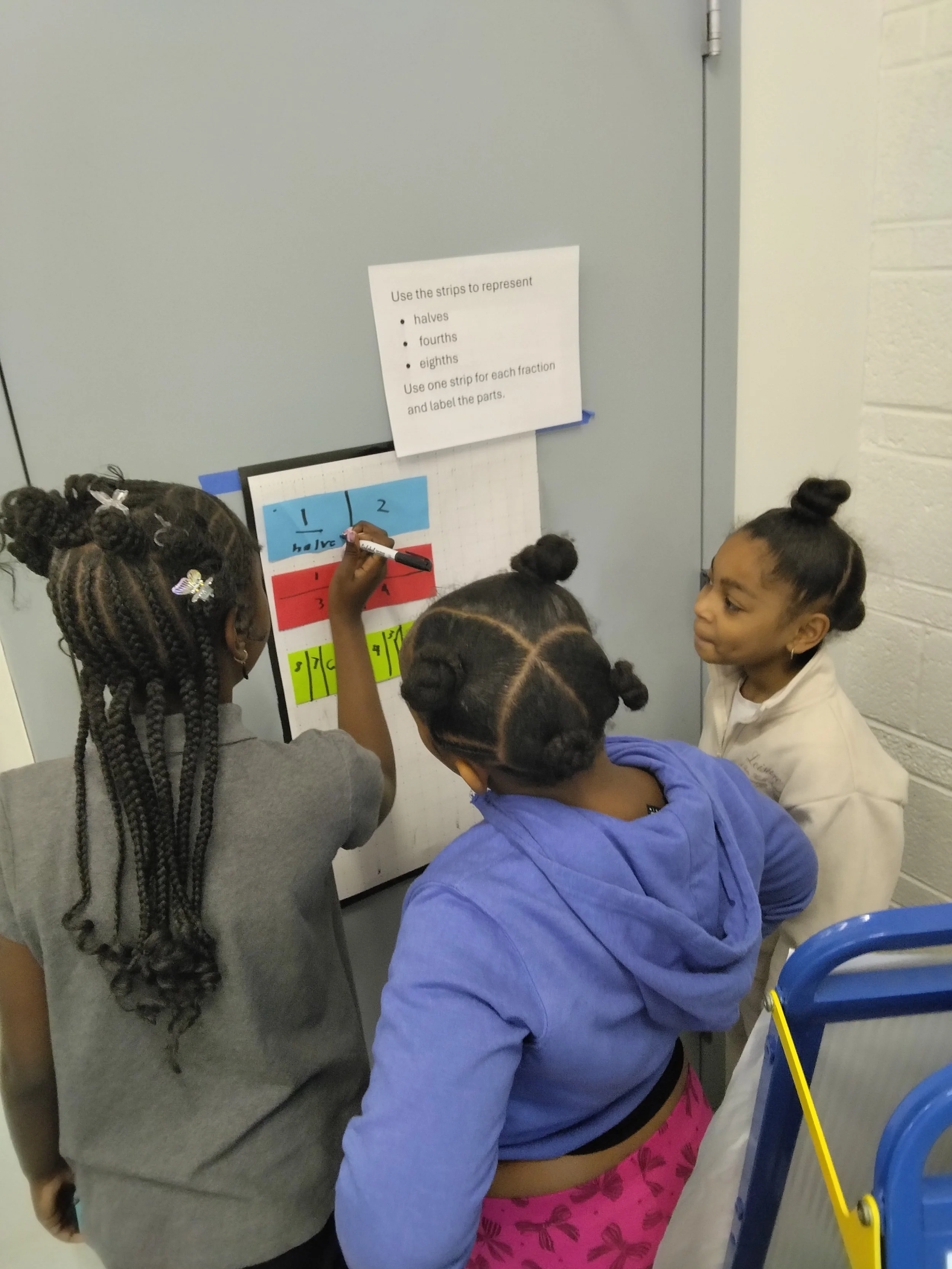
Listening, sharing and solving as a group!