Human Rights Activism
Fifth and sixth grade recently finished up their first module centered around Human Rights. Both grades studied the Universal Declaration of Human Rights (UDHR), but while fifth grade’s guiding text was the award winning Esperanza Rising by Pam Munoz Ryan, sixth grade read a a novel that is quickly gaining more and more respect and attention in middle schools across the country: Black Brother, Black Brother by Jewell Parker Rhodes.
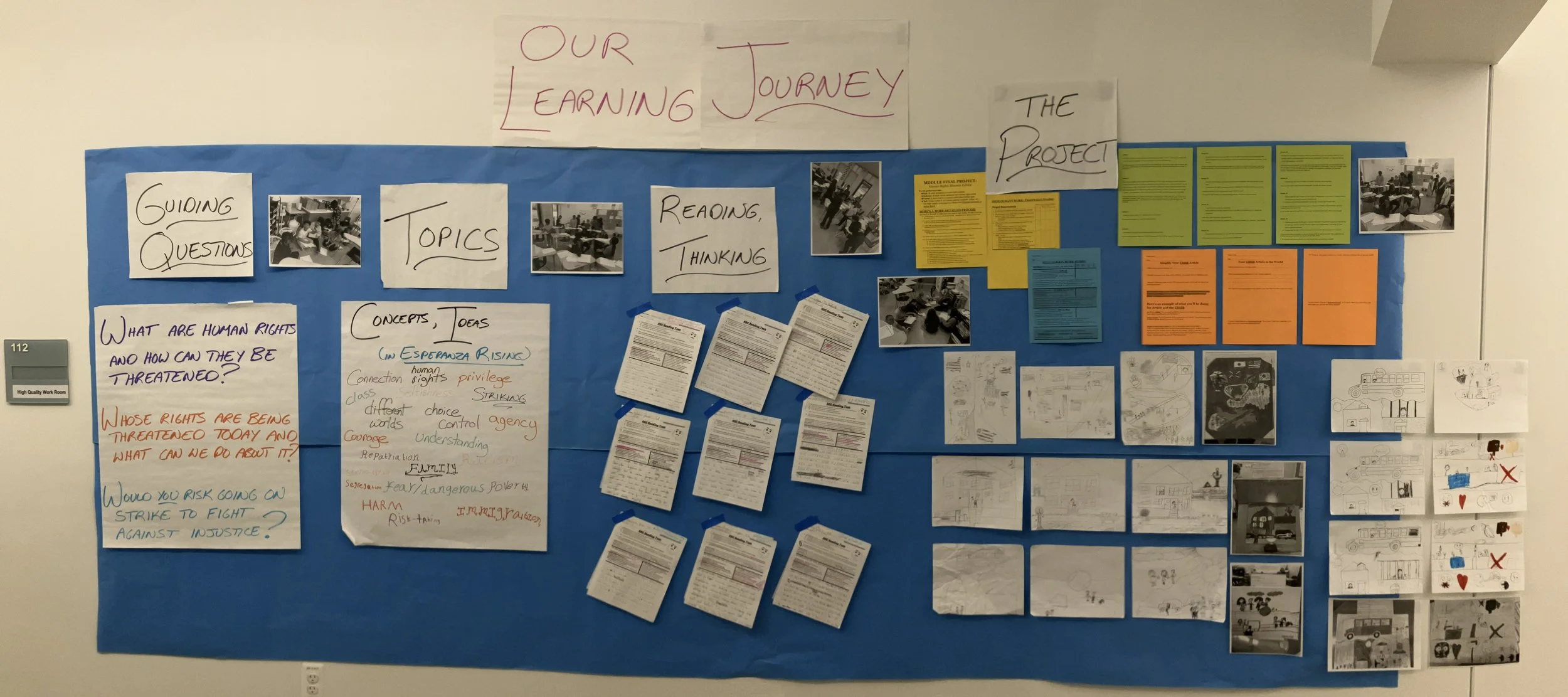
Fifth grade started by examining our first two guiding questions: (1) What are human rights and how can they be threatened? (2) Whose human rights are being threatened today and what can be done about it? After some exploration and discussion, we dove into our leading novel head first to explore them further. As we read the text, we worked on reading with more of a purpose. Students learned about SDPW reading–a technique where they focus on thinking while reading (looking for Sentences that contain main ideas, Details that contain important information, Phrases that provoke some kind of reader reaction/response, and Words that catch the reader’s attention). A lot of the novel focuses on a close-knit family and whether or not they will join local farmers in the struggle for better wages and working conditions by striking. This is where we introduced our last guiding question of the module: After exploring the complexities of striking, would you strike against injustice? This last question led to a lot of deep thinking, thoughtful writing pieces, and intense debate.
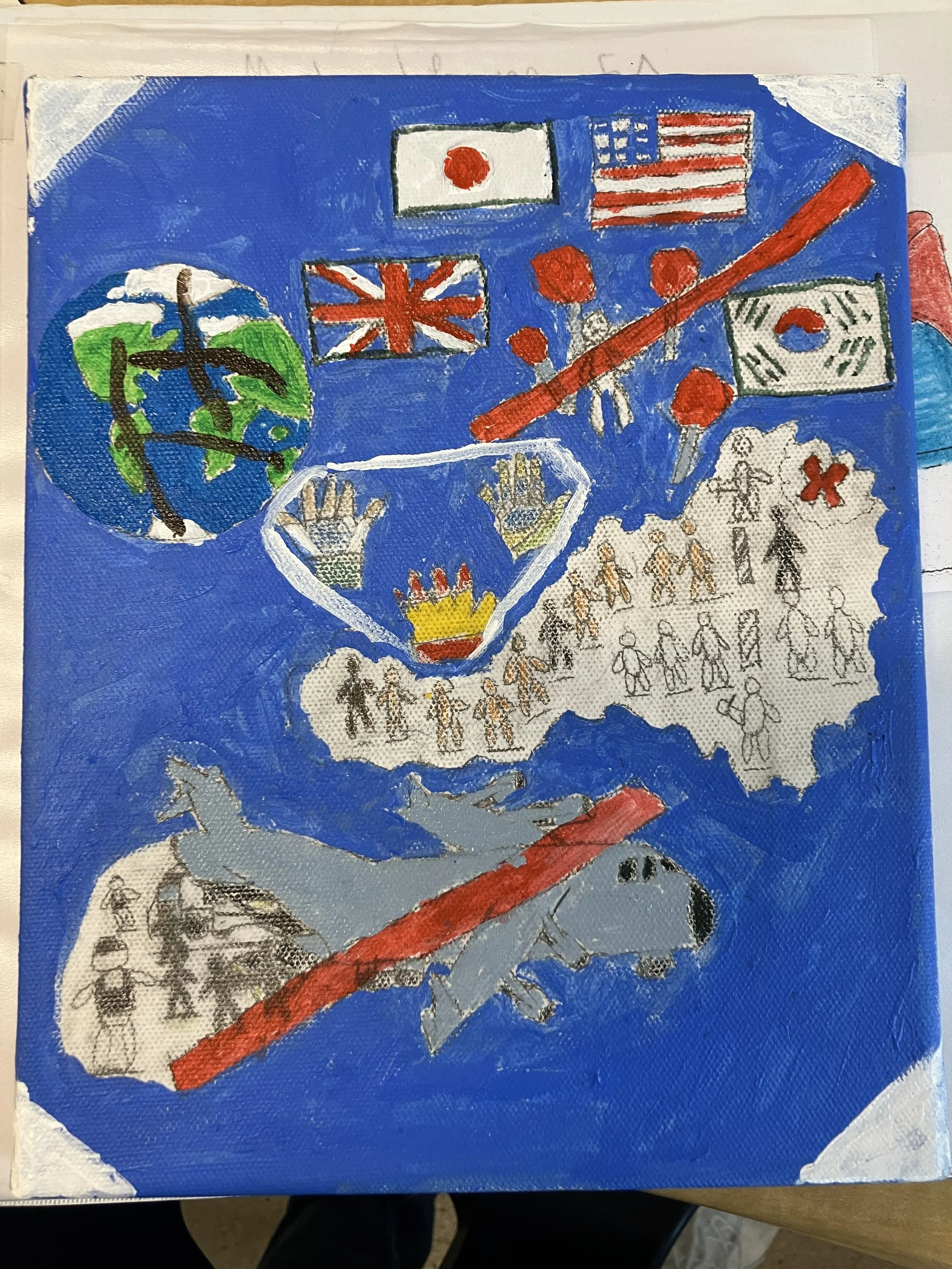
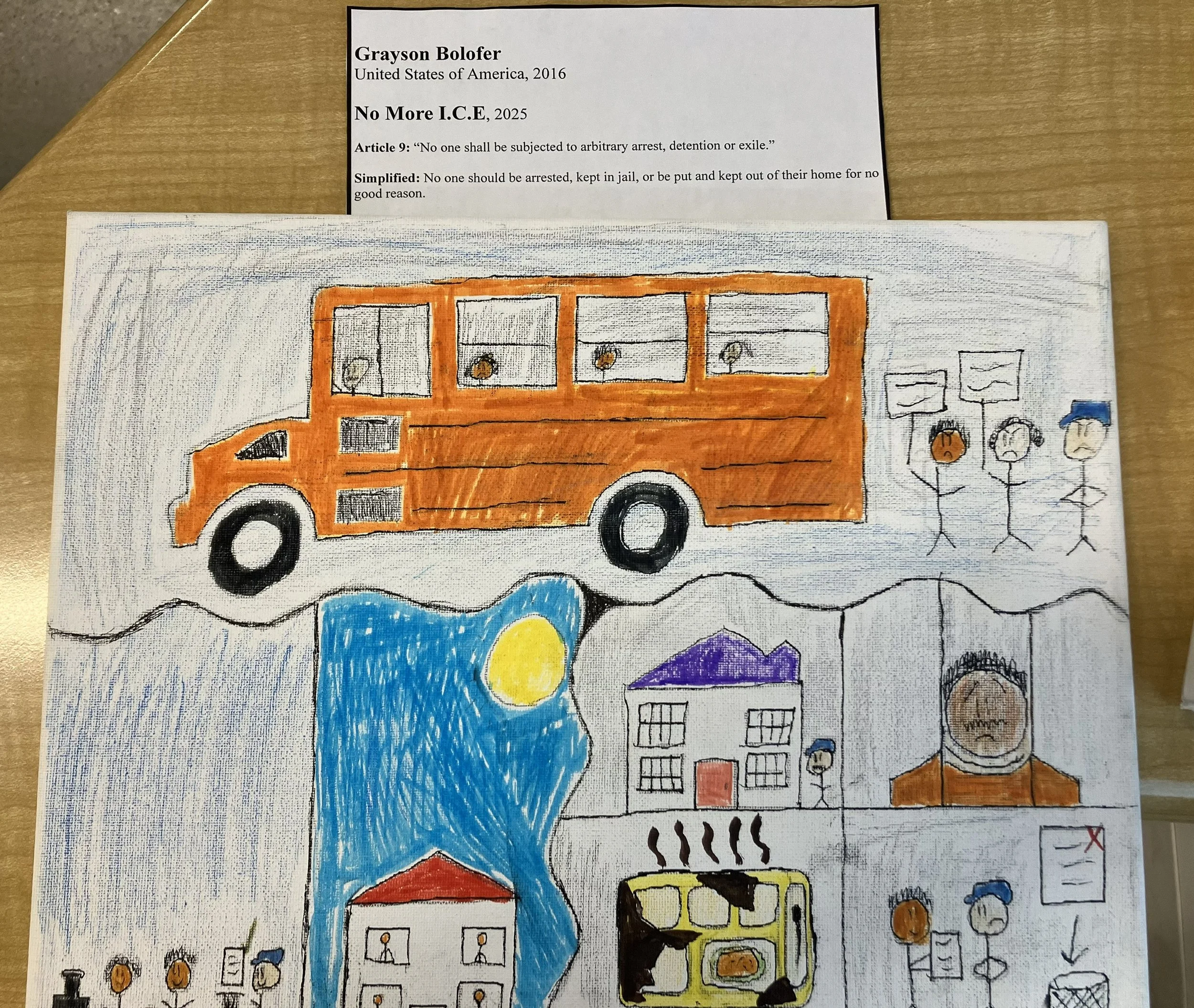
For their celebration of learning, the fifth graders created a human rights art exhibit for the Detroit Institute of Art. They were tasked with creating an art piece of some kind that educated the viewer about one of the articles of the UDHR–why it’s important, how it creates a better world, how it is abused around the world today, etc. Students were even asked to create a label for their work that not only told the reader basic information about their work, but also explained in very simple terms what their article means. Some of these art pieces were truly inspiring and look like they truly belong at the DIA.
Now sixth graders began their module by looking at the sport of fencing (as the novel Black Brother, Black Brother focuses heavily around the protagonist’s struggle to become a champion fencer). They also worked on SDPW reading and this led to some fantastic, thought-provoking discussions about what it means to be seen as well as what is worth fighting for or fighting against. The wide variety of concepts and themes in this novel (ranging from racism and activism to finding yourself and what true success is) were explored in great depth, and really got us all thinking more deeply about what we want from our lives. Several students have shared that this was the best book they have ever read!
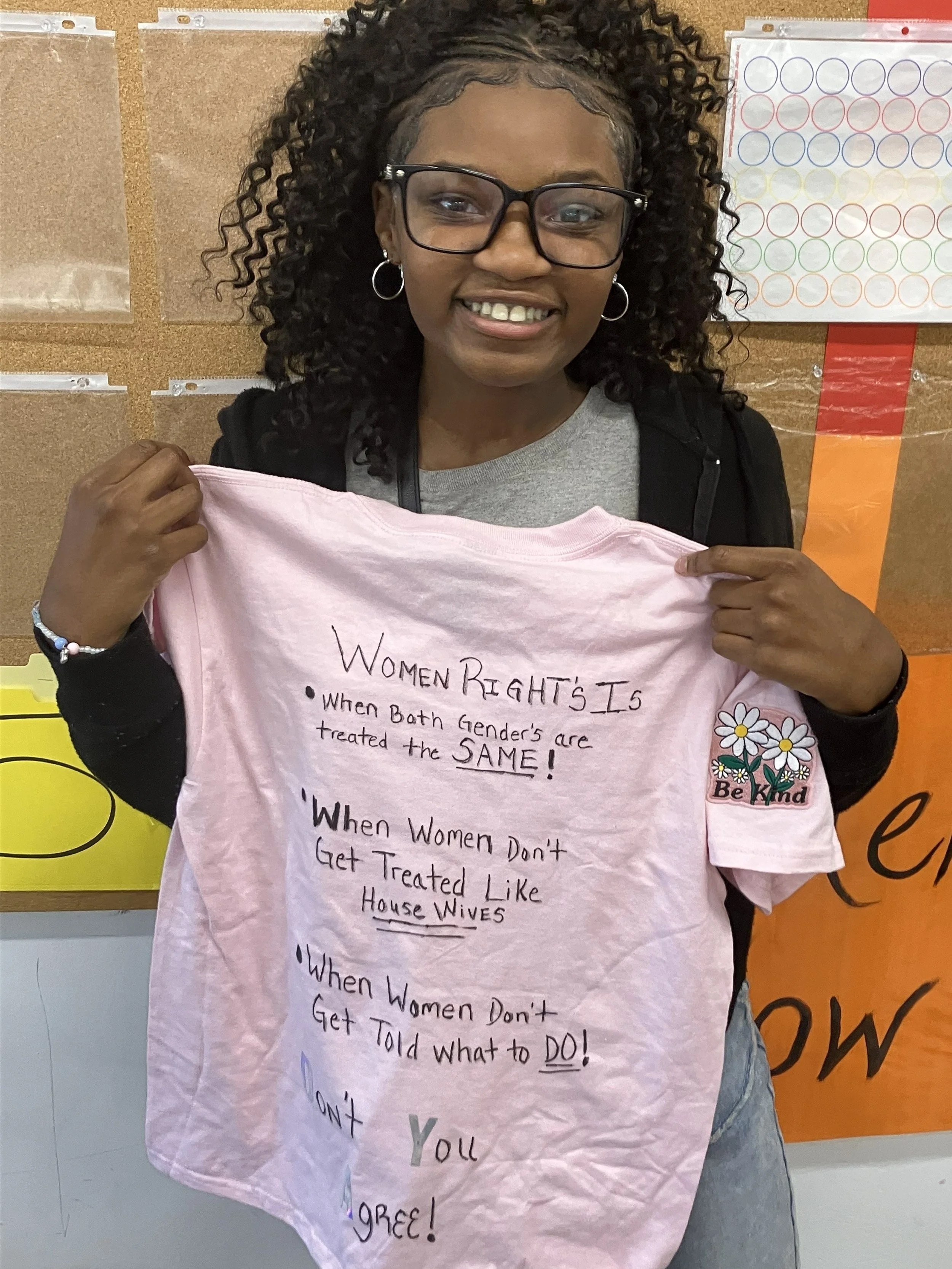
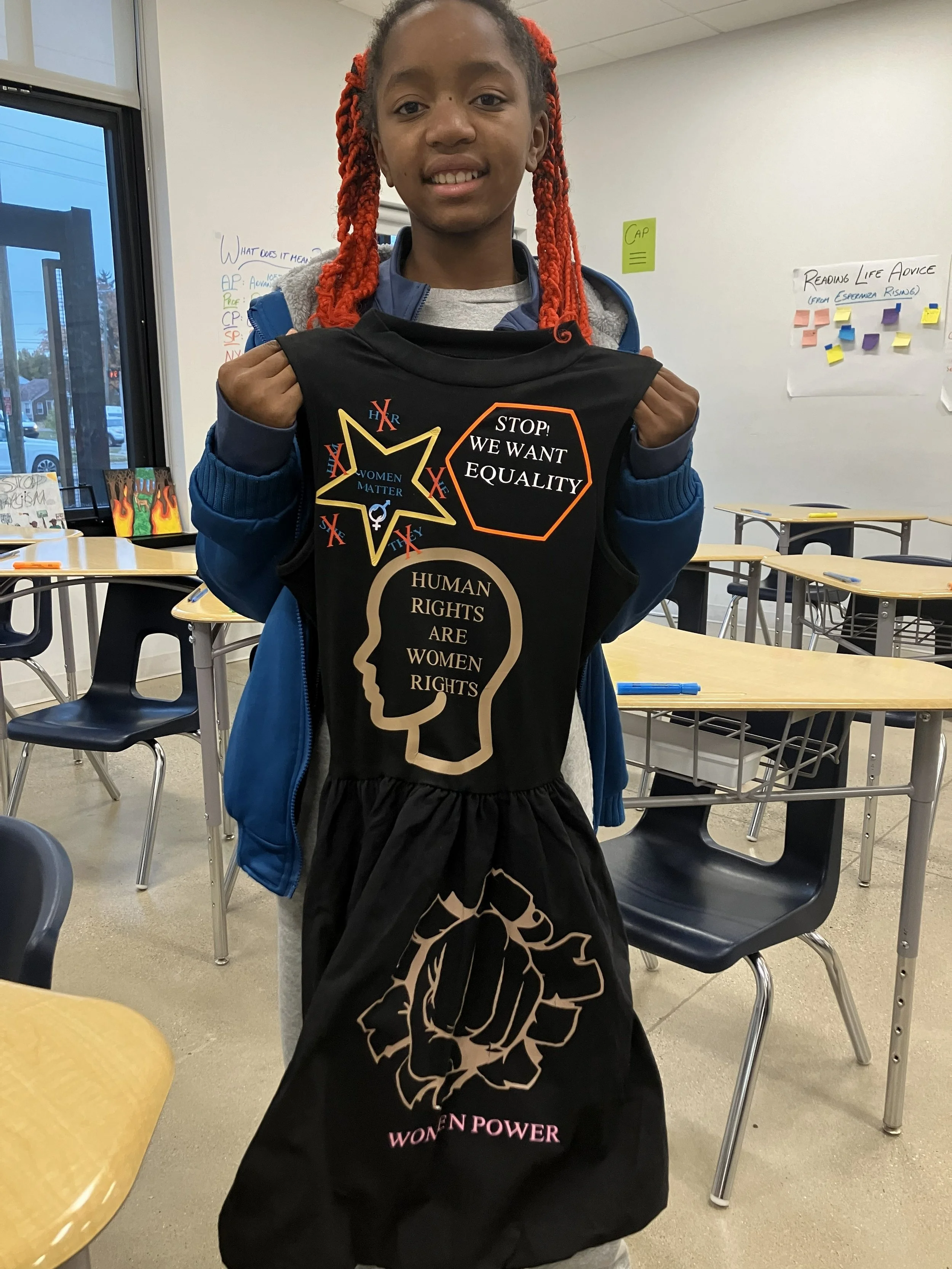
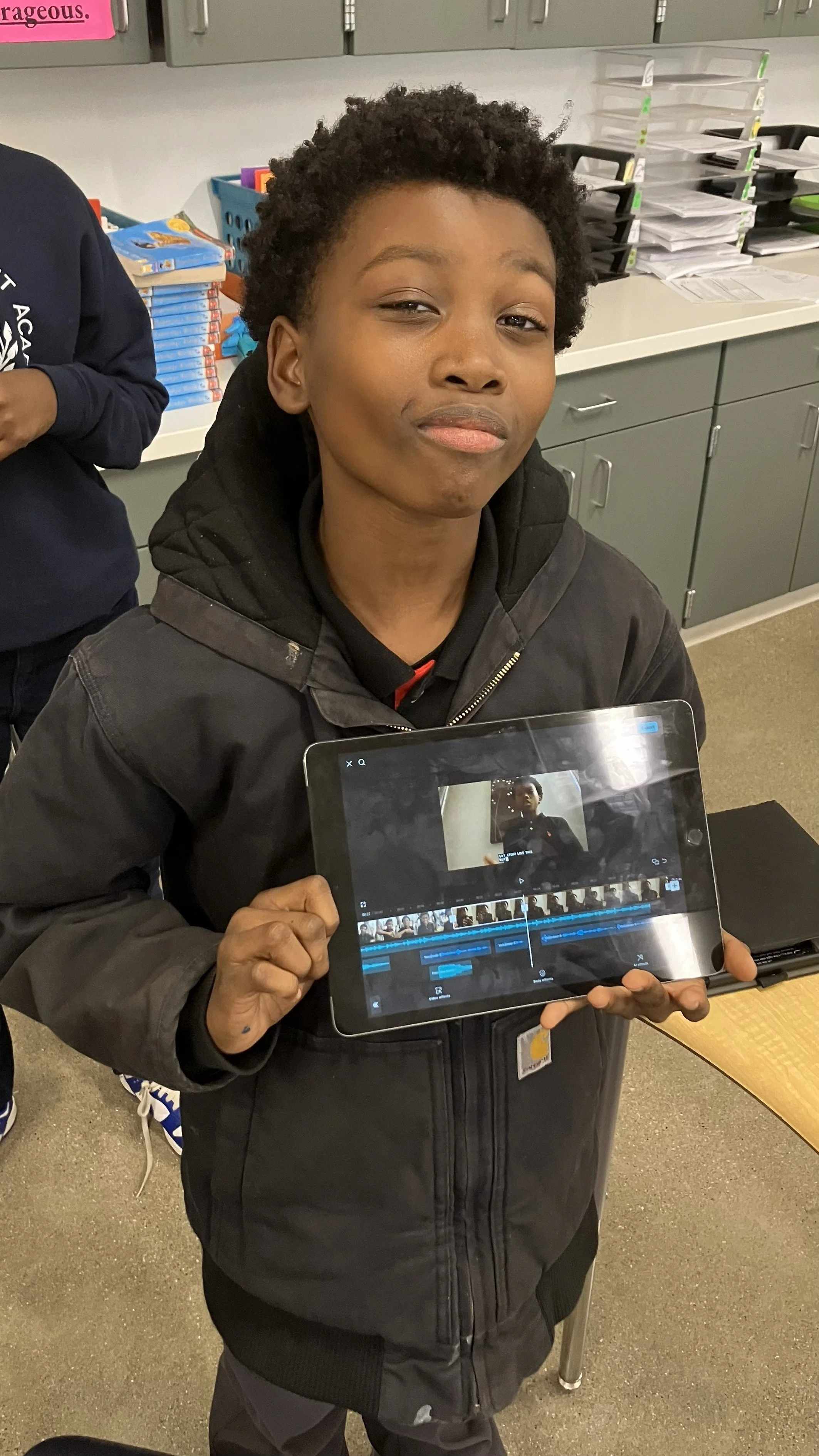
For their celebration of learning project, our sixth graders became activists! That’s right… true activists! They selected a human rights cause that was meaningful to them, selected a method of activism, and then got in the mindset that they were no longer just a young sixth grade pupil, but an activist for their cause. They spent weeks creating various projects to fight against the injustice they chose to focus on. Some of our students became speakers on a TED Talk stage and gave informational speeches against police brutality and against racism. Others became social media influencers and created TikTok and Instagram videos speaking out against bullying and discrimination. Some students with a taste for fashion designed and created outfits as part of a feminist clothing line and showcased their work in a fashion show! This truly was a special module that culminated in some wonderful activism projects!
We just cannot wait to see what these fifth and sixth graders come up with next!
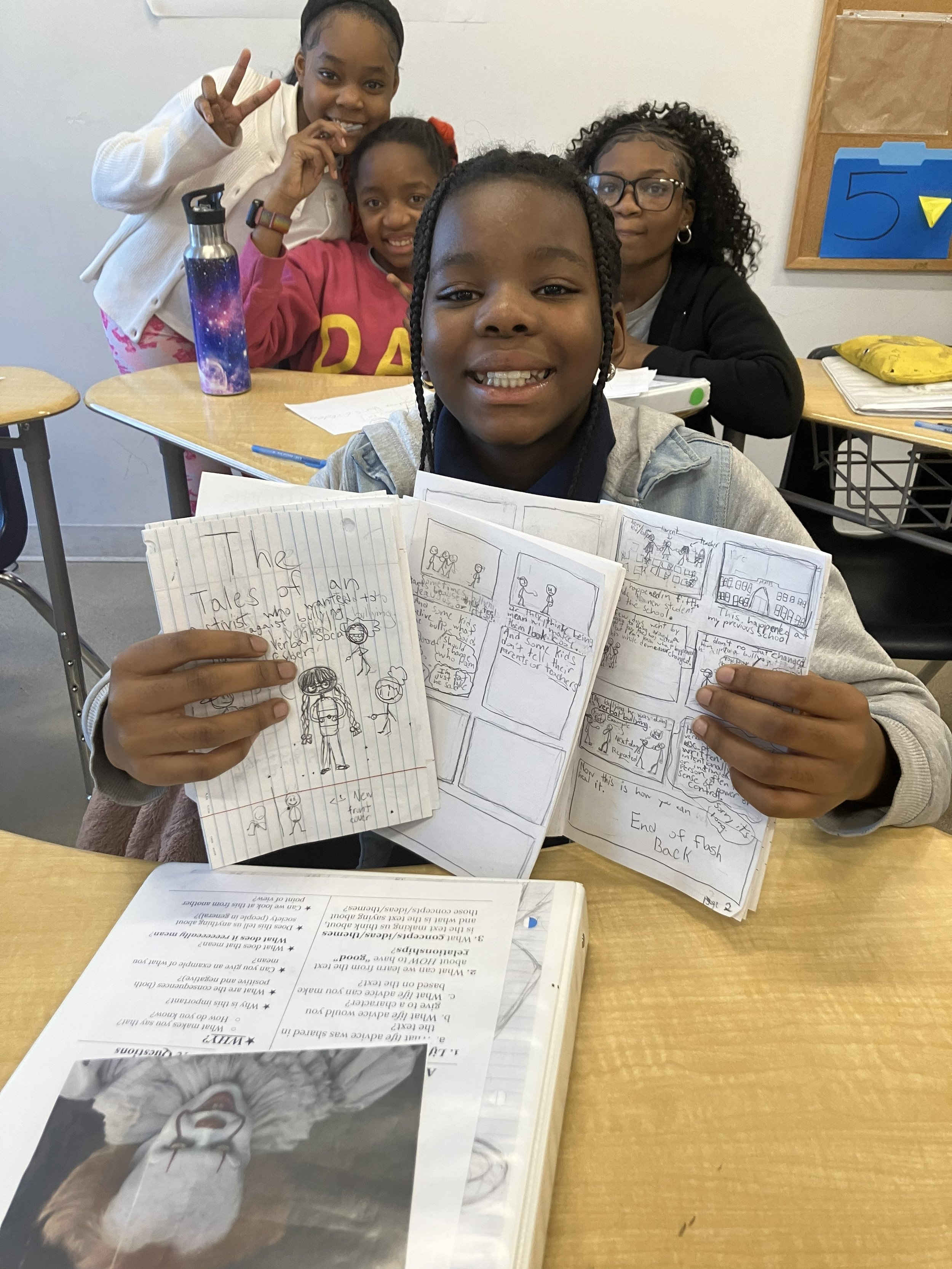
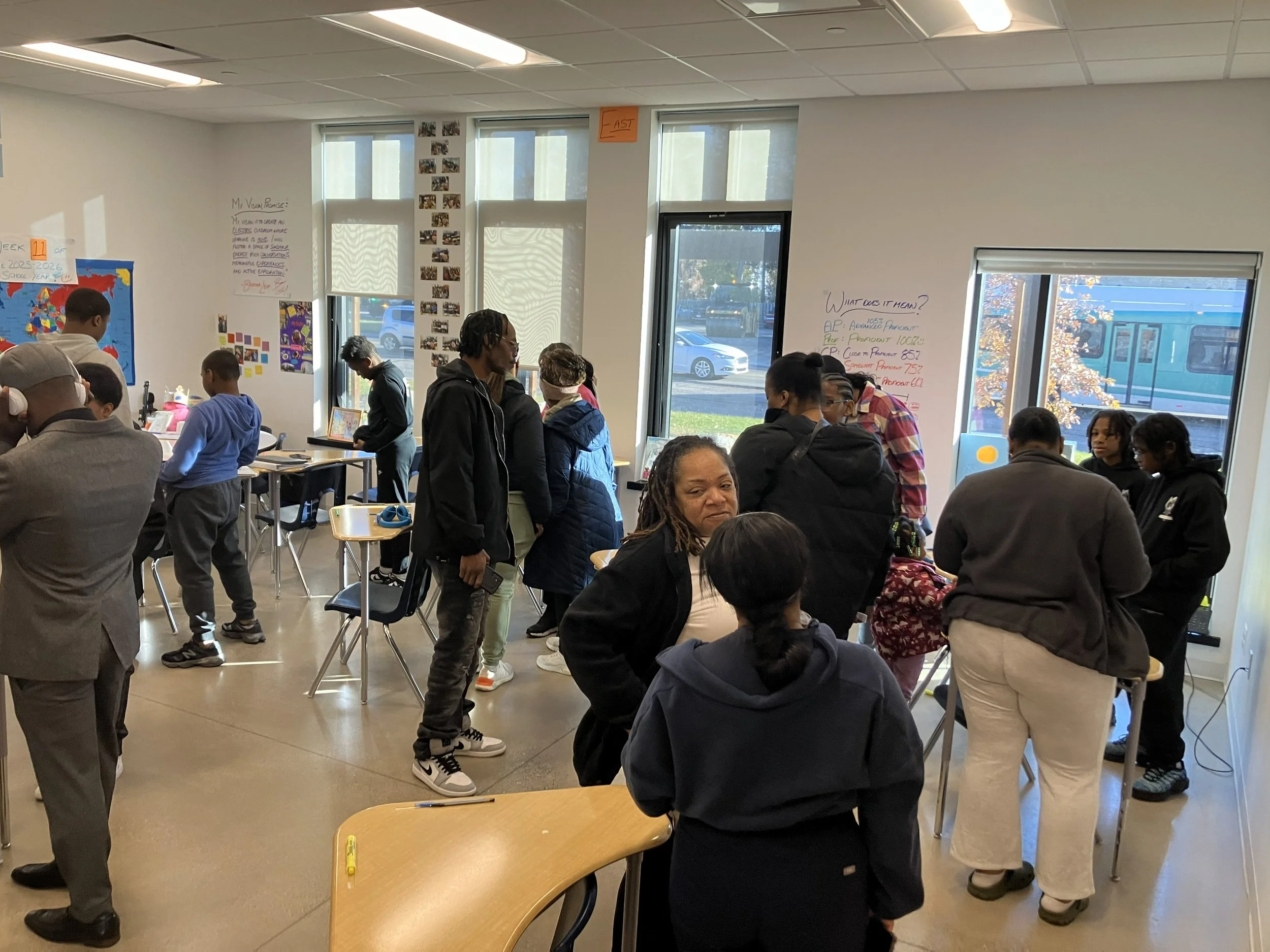
Students present their work to family and friends.
